
Bilingual Notary Ottawa: French and English Documents
Bilingual notary Ottawa — what notarization in French and English actually means in Ontario, when a document needs a certified translator, and how Quebec-bound documents differ.
Last updated: January 30, 2026
Bilingual Notary Ottawa: French and English Documents
Quick answer: A bilingual notary public in Ottawa can deliver the appointment, swear the oath, and complete the jurat in French or English (or both), and can notarize documents drafted in either language. What a notary in Ontario cannot do is translate — if the receiving body wants the document in a different language, that is a job for a certified translator (ATIO in Ontario, OTTIAQ in Quebec). And if the document is destined for a Quebec land registry, a Quebec court, or a Quebec marriage contract, an Ontario notary public is not the same profession as a Quebec notaire and may not be enough on its own. When in doubt, book an appointment and tell us the receiving body — that one sentence usually tells us whether you need notarization in French, certified translation, or a Quebec notaire instead.
Ottawa sits on the edge of two language worlds. The City of Ottawa is officially bilingual at the municipal-services level under its Bilingualism Policy, the federal government delivers all of its public-facing services in both official languages under the Official Languages Act, and the Ottawa River separates Ontario from Quebec only by a bridge. On any given week, our office in downtown Ottawa sees a francophone civil servant from Place du Portage in Gatineau bringing in an English-language permanent-resident application, a francophone Ontarian from Vanier swearing an affidavit en français for use at the Ottawa courthouse, and an anglophone homeowner from Centretown asking what a "Quebec notaire" is and whether a notary public can do the same work. The short answer is: a bilingual Ontario notary public can almost always handle the language, but cannot always handle the jurisdiction, and cannot ever handle the translation.
This article is for Ottawa, Ontario clients with a French document, an English document, or a document going to or from Quebec. It explains what "bilingual notary" actually means in Ontario, why Ontario notaries and Quebec notaires are not the same profession, when you need a certified translator instead of (or in addition to) a notary, and which professional handles five common Ottawa scenarios. The aim is to leave you with a clear next step before you call.
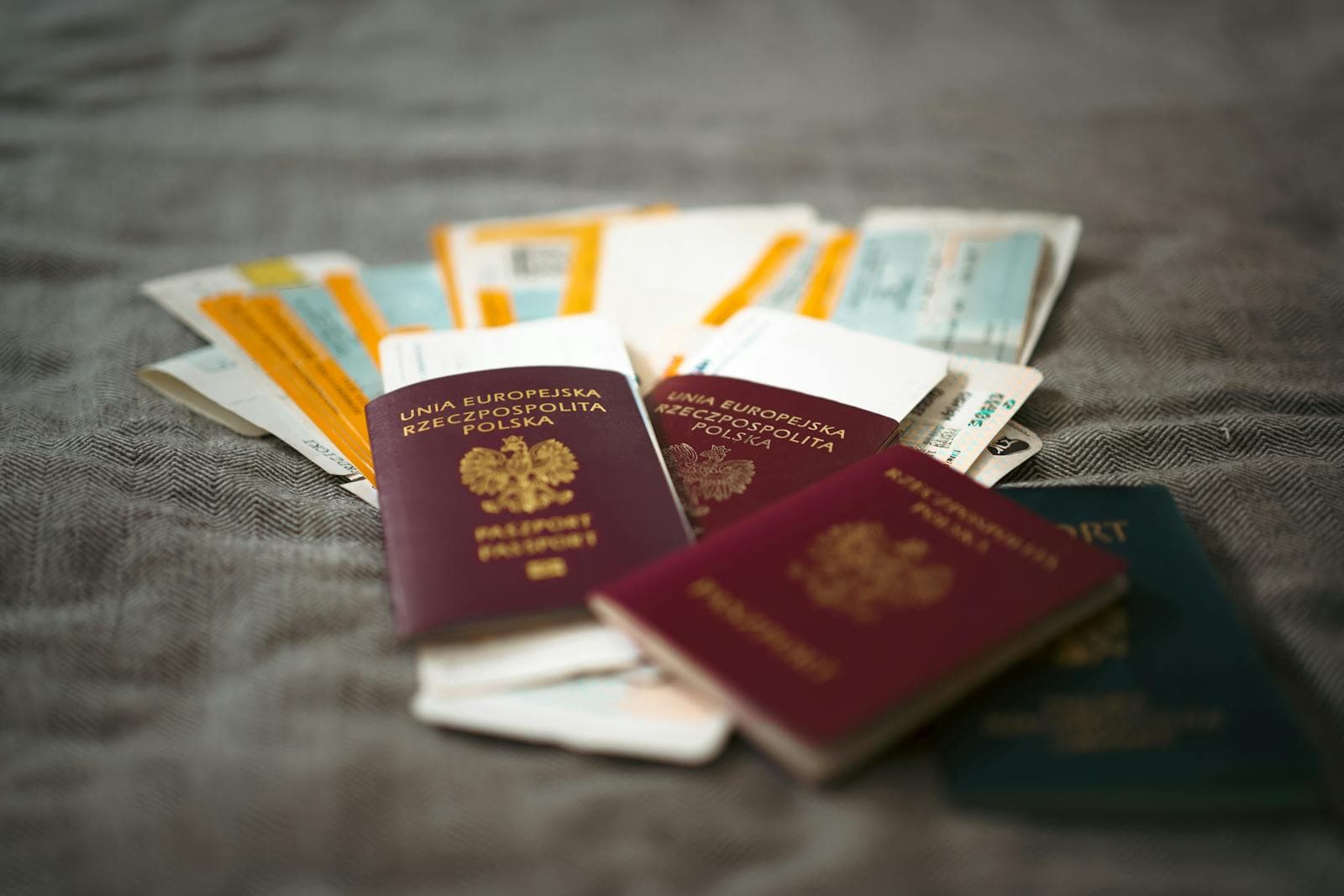
 Caption: French and English documents on the same desk. In Ottawa, that is most weeks.
Key Takeaways
| Question | Short answer |
|---|---|
| Can an Ottawa notary public conduct the appointment in French? | Yes, when the notary is bilingual. The oath, jurat, and certificate can be in French, English, or both. |
| Does the document have to be in English to be notarized in Ontario? | No. A notary public in Ontario can notarize a document drafted in French, English, or any other language. |
| Will a notary translate my French document into English? | No. Translation is the work of a certified translator (ATIO in Ontario, OTTIAQ in Quebec). A notary can certify a true copy; the notary does not translate. |
| Is an Ontario notary public the same as a Quebec notaire? | No. They are different professions. A Quebec notaire is a civil-law jurist regulated by the Chambre des notaires du Québec; an Ontario notary public is a witness-and-certification role under the Notaries Act. |
| If my document is going to Quebec, can an Ottawa notary help? | Sometimes. For most Ontario-issued documents, yes. For Quebec real-estate deeds, marriage contracts, and notarial wills, you need a Quebec notaire. |
| Will IRCC accept a French-language document without a translation? | If the document is in French or English, generally yes. If it is in another language, IRCC requires a translation by a certified translator and an affidavit from the translator. |
What "Bilingual Notary" Actually Means
In Ontario, "bilingual notary" is not a separate appointment or a special category in the Notaries Act. There is one notary public role, granted under the Notaries Act, R.S.O. 1990, c. N.6, with the same statutory powers no matter what language the notary speaks. What "bilingual" describes is the notary's working language — the practical ability to deliver the appointment, take the oath, draft a jurat, and answer client questions in either French or English. For an Ottawa client, this matters in three concrete ways.
The appointment itself is delivered in your preferred language. When you walk into a bilingual notary's office, the notary will ask whether you would prefer to proceed en français ou en anglais. The answer affects how the oath is administered, how the document is explained back to you, and how the notary confirms that you understand what you are about to swear. Ontario law requires that a person taking an oath understands its nature; if you are more comfortable in French, the appointment runs in French. The City of Ottawa's Bilingualism Policy reflects the same idea at the municipal-services level — services in the language the resident chooses — and most professional services in Ottawa, ours included, follow the same convention.
The notary's seal, signature, and jurat can be in either language, or both. A notary public's seal in Ontario typically reads "Notary Public, Province of Ontario, Canada" or its French equivalent "Notaire, Province d'Ontario, Canada". Many Ottawa-area notaries use a bilingual seal precisely because so much of the local practice is mixed. The jurat — the certificate at the bottom of an affidavit that says "Sworn (or affirmed) before me at the City of Ottawa..." — can be drafted in French ("Assermenté(e) devant moi à la Cité d'Ottawa...") or English, depending on which language matches the body of the document. When the document itself is in French, the jurat in French is the natural fit; when it is in English, the jurat in English. Mixed-language documents (e.g., a federal IRCC form with bilingual headings and an English body) usually take an English jurat to match the body, but a bilingual notary will confirm with you before signing.
The document being notarized stays in whatever language it is drafted. This is the part most clients do not expect. A notary public in Ontario does not translate. The notary does not improve, edit, or change the language of the document. If your French-language statutory declaration is going to a federal body that prefers English, the notary will not rewrite it in English; that is translation work, and it has to be done by a certified translator before or after the notarization. The notary's role is procedural — verify identity, administer the oath or affirmation, witness the signature, certify the copy — not editorial. The same is true in reverse: an English document going to a francophone receiver in Quebec or France stays in English unless a translator is brought in.
There is a fourth detail worth knowing. The Notaries Act applies in Ontario; an Ontario notary's authority stops at the provincial border. In practice, the notarial seal of an Ontario notary is recognized across Canada and internationally because of long-standing reciprocity and because Global Affairs Canada and the Hague Apostille Convention provide an authentication layer for cross-border use. But the notary's appointment is provincial. A bilingual Ottawa notary public is an Ontario notary public who happens to work in two languages — not a national or federal officer, and not a Quebec notaire.
The practical takeaway: if you are an Ottawa resident and your document is in French, English, or a mix of both, a bilingual Ontario notary public can almost certainly handle it. The language choice is yours.
Ontario vs Quebec: Two Different "Notary" Roles
If a single sentence saves the most confusion in this article, it is this one: an Ontario notary public and a Quebec notaire are not the same profession. They share a French-language root and a passing resemblance on a business card, and that is roughly where the overlap ends. Mixing them up is the most expensive mistake we see in our office — usually because someone in Ottawa booked a notary public for a document that needed a Quebec notaire, or vice versa, and the deadline closed before the substitution was caught.
Ontario operates under the common-law tradition. A notary public in Ontario is appointed under the Notaries Act, R.S.O. 1990, c. N.6, by the Lieutenant Governor on the recommendation of the Attorney General. The role is procedural: administer oaths and affirmations, take affidavits and statutory declarations, certify true copies of original documents, and witness signatures with a notarial seal. A notary in Ontario does not draft your contract, advise you on its consequences, or hold your funds in trust. A notary witnesses; a lawyer or paralegal advises. We covered the boundary in our notary public vs commissioner of oaths in Ontario article — the same logic applies here, except now the comparator is on the other side of the river.
Quebec operates under the civil-law tradition. A notaire in Quebec is a member of the Chambre des notaires du Québec, which regulates the profession under the Loi sur le notariat. Becoming a notaire requires a law degree, a master's in notarial law, professional training under articling, and admission to the Chambre — a path comparable in length to becoming a lawyer. Once admitted, a notaire is a public officer with broad authority that an Ontario notary public simply does not have. A notaire drafts and signs actes notariés (notarial acts) — formal documents that have the legal status of authentic, self-proving instruments under Quebec law. Real-estate deeds, hypothec agreements (the Quebec equivalent of mortgages), marriage contracts, civil-union contracts, notarial wills, and inventaires après décès are all routine notaire work. A notaire also gives legal advice to clients on the documents they prepare, holds funds in trust, and acts as a neutral legal officer when both parties to a transaction need one.
The contrast on paper is sharp. An Ontario notary public can certify that a copy of your passport is a true copy of the original. A Quebec notaire can do that too, and can also draft the marriage contract that defines how property is held between you and your spouse, register a hypothec at the Quebec Land Registry, and prepare a notarial will that does not require probate. The Ontario notary's job ends at "I witnessed this." The notaire's job begins there and runs deep into substantive Quebec law.
Two consequences for Ottawa clients flow directly from this:
An Ontario notary public cannot do the work of a Quebec notaire. If your document is a Quebec real-estate deed, a Quebec marriage contract, a notarial will under the Code civil du Québec, or anything else that the Code civil requires to be received by a notaire, an Ottawa notary public's seal will not produce a valid Quebec instrument. The form may look fine; the legal effect under Quebec law will be missing. The Quebec Land Registry will not record a deed that is not a notarial act, no matter how carefully an Ontario notary witnessed the signatures.
A Quebec notaire's authority does not extend across the river to Ontario in the same way either. A notaire commissioned in Quebec is, by virtue of statute, also a commissioner for oaths within Quebec. Recognition of a notaire's acts in Ontario depends on whether Ontario law treats the act as a foreign-jurisdiction document, which usually means the act needs authentication by the Ministry of Justice in Quebec or by Global Affairs Canada before it is presented to an Ontario receiving body. For most everyday Ottawa-bound paperwork — affidavits, statutory declarations, certified copies of Ontario documents, IRCC forms — clients who happen to live in Quebec are better off using an Ontario notary public on the Ontario side of the river. The receiving body is in Ontario; the notarization is in Ontario; one fewer authentication step.
There is one practical wrinkle that comes up often in our Ottawa office. An Ontario notary public's title in French is notaire public — and that overlap in vocabulary is exactly why the confusion happens. On a bilingual seal, the line "Notaire / Notary Public" is correct in Ontario; it does not, however, make the notary a Quebec notaire. The seal tells you what office the holder occupies, not what province grants the authority. When a client in Gatineau calls and asks "êtes-vous notaire?", the honest answer is "I am a notary public of Ontario, which in French is notaire public — that is not the same as a Quebec notaire. Tell me what the document is and where it is going, and I will tell you whether I am the right person."
That sentence — "tell me what the document is and where it is going" — is the one we end most cross-river phone calls with. It is also the one this article is built around.
 Caption: An Ontario notary's bilingual seal next to a Quebec notarial act. Different professions, different jurisdictions, different work.
When You Need a Certified Translator (Not a Notary)
A bilingual notary public in Ottawa is not a translator. The two roles share an Ottawa office on the same week sometimes, but they are different professions with different qualifications. If your document needs to change languages — French to English, English to French, or any other language pair — that work is done by a certified translator, and the notary's job comes either before, after, or alongside, but never instead.
In Ontario, the regulator is the Association of Translators and Interpreters of Ontario (ATIO). ATIO is a self-governing professional body whose members hold the title Certified Translator (CT) after passing a certification exam in a specific language pair and direction (for example, French-to-English or English-to-French — the two directions are separate certifications). In Quebec, the equivalent regulator is the Ordre des traducteurs, terminologues et interprètes agréés du Québec (OTTIAQ), whose members hold the title traducteur agréé (a.) Both are members of the Canadian Translators, Terminologists and Interpreters Council (CTTIC) and their certifications are mutually recognized across the country.
For Ottawa clients, the practical effect is this. If your French document needs to be presented in English to an Ontario receiving body — a court, a hospital, an employer, a university — and the receiving body wants a translation, the translation should be produced by an ATIO-certified translator and accompanied by the translator's signed declaration confirming the translation is accurate and complete. The translator's seal and signature are what the receiving body looks for. A notary's seal on the original French document does not turn the original into an English document; it confirms the original.
IRCC is the most common case in our office, and the rules deserve a careful read. Immigration, Refugees and Citizenship Canada (IRCC) requires that documents submitted in a language other than English or French be translated. Per IRCC's published guidance on translation of documents (linked in Sources), the translation must be done by a certified translator (a member in good standing of a Canadian provincial or territorial association of translators), or by a translator who is not certified — in which case the translation must be accompanied by an affidavit from the translator swearing to its accuracy. That affidavit is what an Ontario notary public can commission. The notary takes the translator's oath; the translator does the translation. The notary does not vouch for the translation's accuracy and is not qualified to. If your document is already in French or English, IRCC generally does not require a translation at all — both are official languages of Canada and either is accepted on most application streams. Always check the specific application's instruction guide; some programs at some embassies have additional preferences.
A notary public can also certify true copies of the translator's certified translation. When a foreign embassy or a non-IRCC body wants both the original and the translation, the workflow we see most often runs in this order: (1) the certified translator produces the translation and signs the certification, (2) the notary public certifies a true copy of the original document, (3) the notary public certifies a true copy of the translator's certified translation, and (4) where the receiving country requires apostille or authentication, the certified copies go to Global Affairs Canada under the Hague Apostille Convention. The notary's role is the certification at step 2 and step 3 — not the translation at step 1.
A few things a notary public in Ontario specifically will not do. A notary will not "improve" a translation. A notary will not interpret during the appointment for a client who does not understand French or English (the client should bring a qualified interpreter; for IRCC purposes, bilingual family members are usually not acceptable). A notary will not certify that a French version and an English version of a document say the same thing — that is a translation comparison, and it is again the certified translator's professional act. The procedural line is clear, and we keep to it: identity verified, oath taken, signature witnessed, copy certified. Translation is somebody else's seal.
If you are not sure whether your document needs a translation at all, a useful test is to read the receiving body's instructions slowly. If they ask for "a certified translation" or "a translation by an accredited translator", you need ATIO or OTTIAQ. If they ask for a "certified true copy of the original", you need a notary public to certify a copy. If they ask for both, you need both — in the order above. If they ask for a sworn affidavit from the translator confirming accuracy, you need the translator and the notary together; we book those appointments routinely.
Five Ottawa Bilingual Scenarios
These are the five calls our office takes most often when a French or English question crosses the line. Names are composites; the workflows are real.
Scenario 1: The federal civil servant from Place du Portage with bilingual paperwork. Marie-Ève works for a federal department in Gatineau. Her permanent-resident application package for her spouse arrives partly in English (the IMM forms), partly in French (her notarised relationship statement, which she drafted en français because that is her working language), and entirely in two languages on the bilingual federal forms. She crosses the Portage Bridge on a Wednesday afternoon and books an Ottawa notary public for the affidavit and the certified copy of her French-Canadian birth certificate. The appointment runs in French at her preference; the jurat on the affidavit is drafted in French to match the body; the certified true copy of the French birth certificate is stamped with a bilingual notarial seal. IRCC accepts both official languages, so no translation is needed. One appointment, two languages, no translator. This is the cleanest case in our calendar.
Scenario 2: The Quebec resident in Gatineau using an Ottawa notary for an Ontario-bound document. Jean-François lives in the Vieux-Hull and is selling a small commercial unit located in Ottawa. The Ontario lawyer handling the sale needs an affidavit of execution sworn for use in Ontario. Could a Quebec notaire do it? In principle, the notaire could draft a notarial act, but the Ontario receiving body — the Ontario Land Registry's e-registration system through the lawyer — wants an Ontario-style affidavit with an Ontario jurat. Jean-François drives across the Macdonald-Cartier Bridge, books an Ottawa notary public, and swears the affidavit en français in Ottawa. Because the document is sworn in Ontario for use in Ontario, the Ontario lawyer registers it without authentication. One bridge, one bilingual appointment, one Ontario document. The lesson: when the receiving body is Ontario, an Ontario notary is the simplest path, even when the client lives in Quebec and prefers French.
Scenario 3: The francophone IRCC applicant whose foreign documents are not in French or English. Aïssatou immigrated to Ottawa from Senegal as a francophone, and her university transcripts are in French — IRCC accepts those without a translation. Her family register, however, is in Wolof. For the Wolof document, IRCC requires a certified translation into English or French. Aïssatou hires an ATIO-certified Wolof-to-French translator (rare in Ottawa but available); the translator produces the translation and signs the certification. We then certify a true copy of the original Wolof family register and a true copy of the translator's certified French translation. Together with the IRCC application package, the file goes in. The notary handled the certified copies in step 2 and step 3 of the workflow described earlier; the translator handled the language change. The full file works because each professional did their own job.
Scenario 4: An Ottawa francophone swearing an affidavit en français for the Ottawa courthouse. Pierre, a francophone Ontarian living in Vanier, is a witness in a civil matter at the Ottawa courthouse on Elgin Street. His lawyer drafts the affidavit in French because the Ontario Courts of Justice Act permits French as a procedural language at designated bilingual courts, and Ottawa is one of them. Pierre comes to our office to swear the affidavit. The appointment runs in French; the jurat is in French; the seal stamp is bilingual. The lawyer files the French-language affidavit at the Ottawa courthouse without a translation, because French is an official language of the court. This scenario is one of the cleanest demonstrations of why bilingual notarization in Ottawa actually matters: the entire workflow stays in French from drafting to filing, and an Ontario notary public is the right professional throughout.
Scenario 5: The Ottawa client whose document is destined for Quebec where a notaire is required. Susan owns a triplex in Gatineau, inherited from a parent. She wants to refinance the property. The Quebec lender requires a hypothec, which under the Code civil du Québec must be received by a Quebec notaire in the form of a notarial act and registered at the Quebec Land Registry. Susan calls our Ottawa office assuming a notary public can handle it. We tell her, gently, that this is the case the article is about: an Ontario notary public cannot do the work of a Quebec notaire, and a hypothec is exactly the kind of substantive Quebec instrument that requires the notaire's authentic act. We refer her to the Chambre des notaires du Québec's directory to find a notaire in Gatineau, where she eventually books her appointment. We did not bill her for the call. The right answer is sometimes "you need someone else" — saying so quickly is the most useful thing a notary office can do.
The pattern across these five scenarios is consistent: identify the receiving body, identify the language of the document, identify whether substantive Quebec law applies. If the receiving body is in Ontario or federal, an Ontario notary public is almost always enough — bilingually. If the receiving body is in Quebec and the document is governed by the Code civil, a Quebec notaire is required. If the document is in a language other than French or English, a certified translator joins the workflow. We are usually one phone call away from telling you which combination you are looking at.
 Caption: Ottawa on one side, Gatineau on the other. Most cross-river notary questions come down to one detail — which side is the receiving body on?
Document-Language Matrix
After eight pages of context, you may want a single table you can scan before you call. This is the matrix our office uses on the phone. Read it as a starting point, not a final answer — the receiving body's instructions always win, and one or two of the rows below have edge cases that the column "Notes" hints at but cannot fully cover.
| Document language | Receiving body | Right professional | Notes |
|---|---|---|---|
| English | Ontario court, Ontario gov, Ontario lawyer, Ottawa employer | Ontario notary public (or commissioner of oaths for affidavits) | Standard Ontario workflow. Bilingual seal is optional, not required. |
| French | Ontario court (Ottawa, designated bilingual) or any Ontario receiver that accepts French | Ontario notary public, ideally bilingual | Ottawa courthouse on Elgin accepts French filings; many Ontario receivers also do. Ask first. |
| English or French | Federal body (IRCC, Service Canada, Passport Canada, CRA) | Ontario notary public | Both official languages accepted across federal services under the Official Languages Act. |
| English | Quebec court, Quebec ministry, Quebec employer | Ontario notary public is usually fine; sometimes a Quebec commissaire à l'assermentation is preferred | For an Ontario-issued document being read in Quebec, an Ontario notarial seal generally travels with one authentication step if asked. |
| French | Quebec court, Quebec ministry, Quebec employer | Ontario notary public (bilingual) or Quebec commissaire — both work for sworn statements | The choice often comes down to convenience: Ontario notary if you live or work near Ottawa, commissaire if you live or work near Quebec receivers. |
| English or French | Quebec Land Registry, Quebec marriage contract, inventaire après décès, notarial will, hypothec | Quebec notaire (no Ontario substitute) | These are actes notariés under the Code civil du Québec. An Ontario notary public cannot produce a valid notarial act. |
| Any language other than French or English | IRCC | Certified translator + Ontario notary public | Translator (ATIO/OTTIAQ) translates and certifies; notary commissions the translator's affidavit if the translator is not certified, and certifies true copies of both original and translation. |
| Any language other than French or English | Foreign embassy in Ottawa or Global Affairs Canada (apostille) | Certified translator + Ontario notary public + Global Affairs authentication | Same workflow as IRCC, plus apostille or authentication step depending on destination country. See our notarial copy vs certified copy vs witnessed copy explainer for which copy type the embassy is asking for. |
A few rows deserve a sentence of plain-language commentary:
The English document for a Quebec receiver row is the one that surprises people most. There is a common assumption that anything Quebec-bound has to go through a notaire. That is true for the substantive Quebec instruments listed in the second-to-last row, but for everyday paperwork — an English-language affidavit a Quebec employer wants for HR records, a statutory declaration for a Quebec ministry program — an Ontario notary public's seal is normally enough, and the receiver will read the document as a foreign-jurisdiction Ontario document. If the Quebec receiver pushes back, the next escalation is authentication by the Ontario Ministry of Public and Business Service Delivery, then by Global Affairs Canada under the Apostille Convention if Quebec asks for it (rare for inter-provincial work).
The French document for an Ontario receiver row depends on the receiver. The Ottawa courthouse is comfortable with French. Many Ottawa-area lawyers, employers, and city offices are too. A small-town Ontario receiver outside the federally bilingual zone may want an English translation alongside the French original — at which point a certified translator joins the workflow, exactly as in the IRCC pattern.
The non-French, non-English rows always involve a certified translator. The notary's role is to commission the translator's affidavit (if the translator is not ATIO/OTTIAQ certified) and to certify true copies of both the original and the translation. That order matters; we cannot stamp a translation we cannot read.
What to Bring to Your Appointment
A bilingual notary appointment in Ottawa runs faster — and ends with the right outcome — when you arrive with the right paper in hand. The list below covers the four items we ask every bilingual or cross-river client to bring, plus three optional items that help when the file is more complicated than usual.
The original document. Bring the actual original, not a photocopy and not a phone photo. If we are certifying a true copy, the only way to do that legally is to compare the copy in front of us against the original in front of us, page by page. If we are commissioning an affidavit or statutory declaration, we will sign and seal the original, and you take it away with you. For French-language documents this is especially important: we cannot reconstruct a missing accent or a missing line from a poor scan, and any uncertainty in the text is a reason to pause and reschedule rather than seal it. Quebec birth certificates, French-language actes de naissance from francophone African and European jurisdictions, and bilingual federal forms all qualify as originals when they are issued by the original authority and bear the issuing seal or signature.
Government-issued photo ID. Two pieces are best: one with a photo (passport, driver's licence, Ontario photo card, carte d'identité from a francophone country if it is recognized), and one without if the first does not include your full address. The names on the IDs need to match the name as it appears on the document we are notarizing. If you have changed your name — common after marriage, common after immigration, common when a francophone form drops accents — bring the legal proof of the change (marriage certificate, certificat de mariage, change-of-name order). The notary cannot certify a copy in a name you cannot prove is yours.
Any prior translation or prior certification. If a certified translator has already produced a translation, bring the original-language document and the translator's signed translation, with the translator's certification page intact. If a Canadian or foreign authority has already authenticated the document — apostille, foreign-affairs stamp, embassy seal — bring all of it, in the order it was applied. We work from what is already there; tearing a document down to start over is rarely the right answer and is rarely cheap.
The receiving body's instructions, if you have them. This is the single most useful piece of paper a bilingual client can bring. The instructions tell us whether the receiver wants a certified true copy or a notarial copy, an affidavit or a statutory declaration, French or English, original or scanned, with apostille or without. Most rejections we see in our office trace back to a guess about what the receiver actually wanted. If the instructions are an IRCC checklist, a foreign embassy email, a Quebec ministry letter, or an Ottawa-courthouse practice direction, print it or pull it up on your phone. We will read it with you and design the appointment around it.
Optional but useful. Bring a French-English dictionary or your own translation notes if your document straddles the line and you want to confirm meaning before swearing — the notary will not translate, but a clearer client makes a cleaner jurat. Bring the contact details of the lawyer or notaire on the other side if your file is cross-river. Bring payment by debit, credit, or e-transfer; we send the receipt in the language of your appointment.
When You Need a Quebec Notaire Instead
There is a short list of documents that an Ontario notary public — bilingual or otherwise — simply cannot do. Each item on the list is a acte notarié under the Code civil du Québec, a category of document that Quebec law requires to be received by a Quebec notaire in their capacity as a public officer. If your document is on this list, the right answer is not "find a more accommodating Ontario notary"; the right answer is a notaire in Gatineau or wherever the property or party is located. The Chambre des notaires du Québec maintains a public directory at cnq.org that lets you search by city and language.
Quebec real-estate transactions. Buying, selling, refinancing, or transferring real property in Quebec runs through a notaire almost without exception. The deed of sale, the acte de vente, must be a notarial act for registration at the Quebec Land Registry. The hypothèque — Quebec's civil-law equivalent of a mortgage — must be a notarial act. The notaire in Quebec performs the same coordinating role that a real-estate lawyer performs in Ontario, but with the additional authority to draft an authentic, self-proving instrument that the Land Registry will accept on its face. An Ottawa-side affidavit will not register a Quebec deed, regardless of language.
Quebec marriage contracts and civil-union contracts. A contrat de mariage or contrat d'union civile under the Code civil is a notarial act. Couples who want to vary the default société d'acquêts matrimonial regime, or who want to define how property is held during marriage and divided in the event of separation, sign the contract in front of a notaire who explains the legal consequences and signs as a public officer. An Ontario marriage contract drafted by a family lawyer is a different instrument under different law and is not a substitute.
Notarial wills and inventaires après décès. A testament notarié in Quebec is a will received by a notaire in the form of an authentic act. Its principal advantage is that it does not require vérification (the Quebec equivalent of probate) after death, which can save the estate time and cost. An inventaire après décès is the formal inventory of a deceased person's assets, again typically received by a notaire. Ontario wills and Ontario estate documents are valid in Ontario but produce different procedural outcomes if applied to a Quebec succession; if the deceased lived in Quebec or owned Quebec real property, this is a notaire matter.
Where the receiver is the Quebec Land Registry, a Quebec court asking for an authentic act, or a Quebec ministry that requires an acte notarié by name. The receiver tells you. If the receiver's instructions name notaire or acte notarié explicitly, an Ontario notary public is not the right professional. If the receiver names commissaire à l'assermentation (commissioner for taking oaths in Quebec), an Ontario notary public's affidavit is normally accepted in lieu, but check first.
A practical note for Ottawa clients with cross-border lives. Most Ottawa residents who own Quebec property already have a notaire on file from the original purchase. If you do not, the cleanest way to find one is to ask the Quebec lender, real-estate agent, or family member who triggered the need for the document — they will usually have a working relationship with one in Gatineau, Aylmer, or Hull. Asking us for a referral is also fine; we keep an informal list of bilingual notaires across the river specifically for this kind of hand-off.
 Caption: When the document is a Quebec acte notarié, the right answer from our office is a referral, not a stamp.
Pricing and Booking
Bilingual service is part of how our Ottawa office works; it is not a separate line item. The prices below are the same whether your appointment runs in French, English, or a mix of both, and whether the document is for an Ontario, Quebec, or international receiver. The standard rates apply per document or per signature; complex multi-document files are quoted before we start. Quebec-bound actes notariés are not on this list because we do not perform them — see the section above on referrals.
| Service | Starting price | What it covers |
|---|---|---|
| Certified True Copies | From $20 | A copy of an original document, certified as a true copy by a notary public. Common for IRCC, embassies, employers, and professional bodies. Available for certified copies of Ontario-issued and foreign-issued originals in any language. |
| Oaths and Affirmations | From $20 | Administering an oath or affirmation, in French or English, for a sworn statement. |
| Notarizing Signatures | From $25 | Witnessing and authenticating a signature with a notarial seal. |
| Statutory Declarations | From $25 | A signed declaration of facts, sworn or affirmed, drafted in French or English. |
| Travel Consent Letters | From $25 | Authorization for a minor traveling with one parent or a guardian, available bilingually. |
| Affidavits | From $30 | A sworn written statement for use in court, IRCC files, or other formal proceedings, with a French or English jurat. |
Multi-document discounts apply when several documents are notarized in the same appointment. Bilingual jurats and bilingual seals do not carry a surcharge. Same-day appointments are usually possible for routine work; cross-river and translator-coordinated files benefit from a day or two of lead time so we can confirm the receiving body's instructions before you arrive.
Booking runs through the same channel as our other immigration documents and certified-copy work. Call (613) 434-5555 or use the contact form and tell us, in either language: what the document is, who the receiver is, and the deadline. From those three details we can almost always confirm in one reply whether you need a notary, a translator, both, or a notaire across the river.
Frequently Asked Questions
Can a bilingual Ottawa notary public accept a document drafted entirely in French?
Yes. An Ontario notary public can notarize a document drafted in French, English, or any other language. The language of the body of the document does not change the notary's authority under the Notaries Act. What changes is the practical fit: a bilingual notary can read the document, confirm the affiant understands what they are swearing, and draft the jurat in French to match the body of the document. Non-bilingual notaries can still notarize a French document if the affiant confirms understanding and the jurat is drafted in a language the notary can read, but bilingual notarization is cleaner. Always ask in advance — most Ottawa offices, including ours, confirm bilingual capacity at booking.
Will an Ontario notary public's seal be accepted in Quebec?
For most documents, yes. Affidavits, statutory declarations, certified true copies, and witnessed signatures notarized in Ontario are routinely accepted across Quebec, especially when the document concerns Ontario subject matter or a federal program. The Quebec receiver may occasionally ask for an extra authentication step from the Ontario Ministry of Public and Business Service Delivery or, for international forwarding, from Global Affairs Canada. The exception is the substantive list in this article — Quebec real-estate deeds, marriage contracts, hypothecs, notarial wills, inventaires après décès — which under the Code civil du Québec must be received by a Quebec notaire. For those, no Ontario authentication will substitute.
Does IRCC require a translation if my document is already in French?
Generally no. IRCC accepts documents in either of Canada's official languages — French and English — without translation, on most application streams. If your acte de naissance is in French, your certificat de mariage is in French, or your French-language professional credentials are issued by a francophone authority, IRCC normally reads them as submitted. Translation is required when the document is in a language other than French or English, in which case a certified translator (ATIO or OTTIAQ) produces the translation, or a non-certified translator's translation is accompanied by an affidavit sworn before a notary public. Always confirm against the specific application's instruction guide, since some streams have additional requirements.
Is a notarized translation the same as a certified translation?
No, and the confusion is common. A certified translation is produced and signed by a certified translator (ATIO in Ontario, OTTIAQ in Quebec), who attests that the translation is accurate and complete. The translator's seal is what receivers like IRCC look for. A notarized translation usually means a translation accompanied by a sworn affidavit from the translator — the notary commissions the translator's oath about accuracy, but does not vouch for the accuracy and is not qualified to. If your receiver asks for "a certified translation", you need a certified translator. If they ask for "a translation with a sworn translator's affidavit", you need both the translator and the notary, in that order.
I live in Gatineau but my employer is in Ottawa — should I use an Ontario notary or a Quebec commissaire?
For a sworn statement that your Ontario employer is collecting, an Ontario notary public is almost always the simpler path. The document is sworn in Ontario for use in Ontario, the jurat reads correctly without authentication, and the bilingual seal accommodates a French-language declaration if you prefer. A Quebec commissaire à l'assermentation can take the oath in Quebec, but the Ontario receiver may ask for an authentication step before accepting it. Cross the bridge once, swear in Ottawa, file in Ottawa. The reverse case — Quebec employer collecting from an Ottawa resident — runs the same way in mirror image: swear in Quebec, file in Quebec.
Final Recommendation
If you remember three things from this article, let them be these. One: an Ontario notary public who is bilingual can deliver the appointment, the oath, and the seal in French or English, on documents drafted in either language, for almost any Ontario or federal receiver. The language choice is yours, and it does not change the price or the legal effect. Two: an Ontario notary public is not a Quebec notaire. The two professions share a French word and very little else. If your document is a Quebec real-estate deed, a marriage contract, a hypothec, a notarial will, or an inventaire après décès, the right professional is a notaire commissioned in Quebec — no Ottawa stamp will substitute. Three: a notary is not a translator. If your document needs to change languages, the certified translator (ATIO in Ontario, OTTIAQ in Quebec) does the translation, and the notary may certify true copies of original and translation, or commission the translator's affidavit, depending on the receiver.
The single most useful sentence to lead with when you call any Ottawa notary office is: "Here is what the document is, here is who the receiving body is, and here is the deadline." Three details, one minute of conversation, and the right professional — notary, translator, notaire, or some combination — comes into focus. We answer the phone in French and in English, and we are happy to tell you when we are not the right office. That is the bilingual practice.
Book Your Appointment
Ready to book, or still not sure who you need? Either is fine. Call (613) 434-5555 during weekday hours (Monday to Friday, 9:00 AM to 5:00 PM) or Saturday from 10:00 AM to 2:00 PM. Use the contact form at any hour and we will reply the next business morning, in French or English depending on your message. Same-day appointments are usually possible for routine bilingual notarization; cross-river or translator-coordinated files are easier with a day or two of lead time. We are in downtown Ottawa, a short walk from the Portage Bridge if you are coming from Gatineau, and a short drive from the Ottawa courthouse on Elgin Street if you are coming from a hearing. Tell us what the document is, who the receiver is, and the deadline — en français ou en anglais — and we will take it from there.